

Introduction
Luxury fashion is built on long-term value, craftsmanship, and structured wardrobe planning. While runway trends shift throughout the year, a seasonal luxury wardrobe depends on foundational pieces that align with climate, lifestyle, and investment strategy.
Seasonal luxury wardrobe essentials are garments and accessories selected for durability, versatility, and repeat wear. Instead of purchasing trend-driven items, consumers who focus on seasonal planning create wardrobes that remain relevant across multiple years.
This article outlines the essential luxury pieces for each season and explains how to build a structured wardrobe strategy.
Understanding Seasonal Wardrobe Planning
Seasonal wardrobe planning involves:
- Climate awareness
- Fabric selection
- Layering systems
- Footwear rotation
- Accessory coordination
Luxury consumers prioritize quality materials that perform according to seasonal conditions. Each season requires specific structural garments that support comfort and presentation.
Spring Luxury Wardrobe Essentials
Spring represents transition. Temperatures fluctuate, requiring layering strategies and fabric balance.
1. Structured Lightweight Coat
A lightweight trench or tailored coat provides coverage during variable weather. Neutral tones allow integration with existing wardrobe pieces.
Investment focus:
- Durable fabric
- Defined silhouette
- Functional pockets
A structured coat often becomes a long-term wardrobe staple.
2. Silk or Fine Cotton Shirts
Breathable fabrics support comfort while maintaining formal structure. These shirts pair with tailored trousers, skirts, or denim.
Key considerations:
- Fit precision
- Fabric consistency
- Neutral color range
Luxury brands prioritize fabric sourcing to maintain longevity.
3. Tailored Trousers
Structured trousers remain central to spring wardrobes. They transition from office settings to social occasions.
Focus areas:
- Waist structure
- Clean seam alignment
- Comfortable fabric weight
Tailored pieces align with quiet luxury direction.
4. Leather Loafers or Low Heels
Footwear for spring balances function and refinement. Structured loafers or minimal heels offer repeat wear across occasions.
Luxury footwear should include:
- Durable sole construction
- Quality leather finish
- Balanced proportion
Summer Luxury Wardrobe Essentials
Summer wardrobes require breathable materials and simplified layering.
1. Linen or Lightweight Wool Blazer
A breathable blazer supports formal events without excess weight. Luxury construction ensures shape retention.
Investment points:
- Wrinkle resistance
- Shoulder structure
- Neutral shade
2. Structured Day Dress or Lightweight Suit
A defined silhouette suitable for social or professional settings remains essential.
Focus on:
- Balanced proportions
- Minimal hardware
- Breathable fabric
3. Premium Sandals or Minimal Sneakers
Summer footwear must provide comfort without sacrificing structure.
Luxury features include:
- Leather insole
- Secure stitching
- Balanced sole thickness
4. Structured Handbag
Summer accessories often define seasonal identity. A structured leather handbag in neutral tone ensures repeated use.
Consider:
- Internal compartment design
- Hardware durability
- Resale value
Autumn Luxury Wardrobe Essentials
Autumn introduces layering and texture.
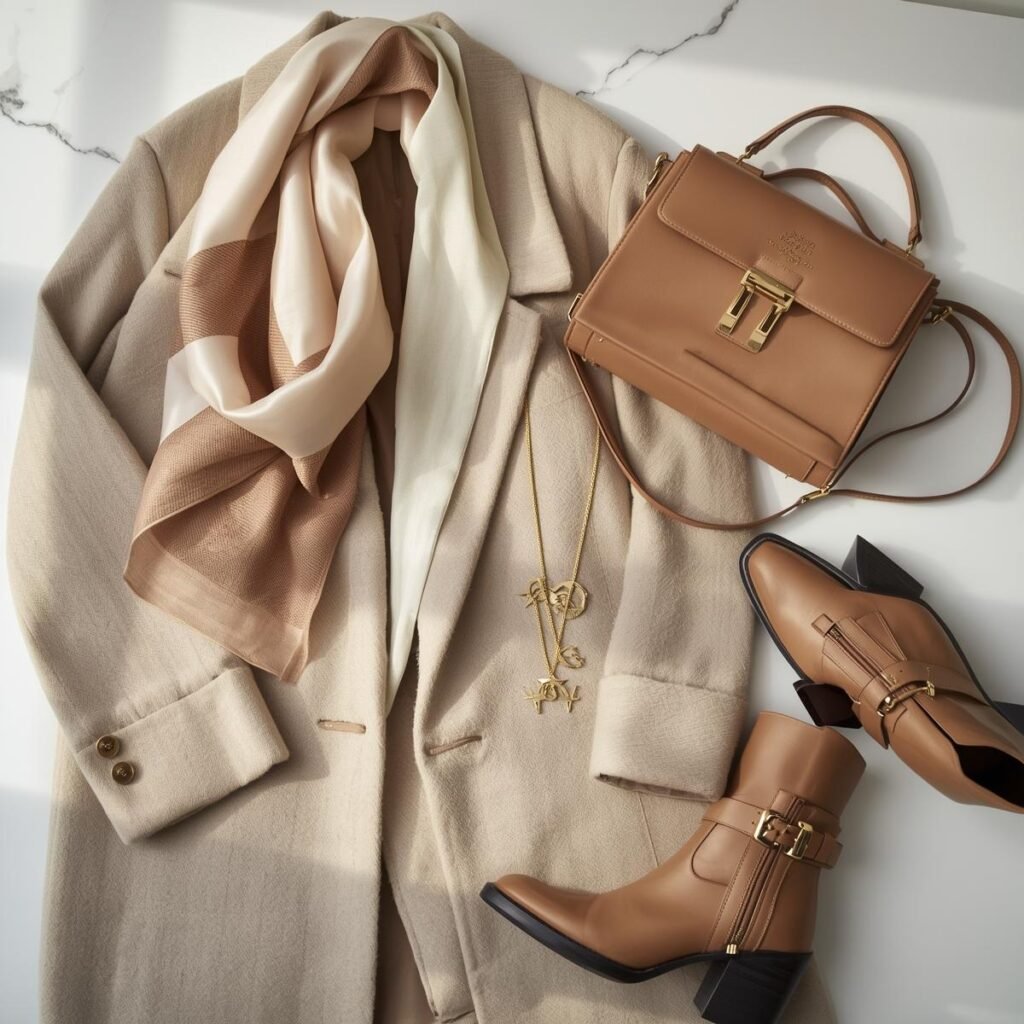
1. Tailored Wool Coat
A wool coat provides warmth and defines seasonal style. Neutral shades maintain long-term usability.
Quality indicators:
- Dense weave
- Strong lining
- Structured shoulder
2. Knitwear in Natural Fibers
Knitwear supports layering under coats or over shirts.
Focus on:
- Even knit tension
- Durable cuffs
- Balanced weight
3. Leather Boots
Boots become primary footwear during autumn. Structured design supports daily wear.
Investment factors:
- Reinforced sole
- Quality zipper or closure
- Clean finishing
4. Structured Leather Belt
Belts refine layered outfits and support tailoring.
Luxury belts should include:
- Durable buckle
- Consistent leather thickness
- Minimal surface branding
Winter Luxury Wardrobe Essentials
Winter wardrobes focus on insulation and structure.
1. Long Structured Overcoat
A long overcoat remains central to winter investment strategy.
Features to evaluate:
- Fabric density
- Internal lining
- Seam strength
2. Cashmere or Wool Sweaters
Natural fibers provide insulation without excess weight.
Look for:
- Tight knit construction
- Durable neckline
- Shape retention
3. Structured Boots or Closed Shoes
Winter footwear requires weather resistance and durability.
Quality markers:
- Strong sole grip
- Protective finishing
- Stitch reinforcement
4. Leather Gloves and Structured Scarf
Accessories enhance winter layering.
Focus on:
- Material strength
- Stitch precision
- Long-term usability
All-Season Investment Pieces
Some luxury essentials remain relevant across seasons.
1. Tailored Suit
A structured suit adapts to all seasons with fabric variation.
2. Neutral Handbag
Structured handbags support both formal and casual styling.
3. Minimal Jewelry
Metal jewelry with clean design remains stable across seasonal changes.
4. Classic Watch
A structured timepiece functions as both accessory and utility item.
Fabric Selection by Season
Luxury wardrobe planning requires fabric awareness.
- Spring: Cotton, lightweight wool
- Summer: Linen, silk blends
- Autumn: Wool, leather
- Winter: Cashmere, heavy wool
Fabric durability determines garment lifespan.
Color Strategy for Seasonal Planning
Seasonal luxury wardrobes often rely on structured color planning.
- Neutral tones for foundation pieces
- Limited accent colors for variation
- Consistent palette across seasons
This approach simplifies styling and reduces unnecessary purchases.
Wardrobe Rotation and Storage
Seasonal maintenance protects investment value.
Recommendations:
- Store off-season garments in breathable covers
- Maintain leather with conditioning
- Fold knitwear to preserve shape
- Avoid overexposure to moisture
Luxury garments require consistent care to maintain resale value.
Sustainability and Long-Term Planning
Building seasonal luxury wardrobes reduces excessive consumption.
Investment strategy supports:
- Fewer purchases
- Higher quality selection
- Repair over replacement
- Extended garment lifespan
Sustainability aligns with long-term financial planning.
Retail Strategy and Seasonal Releases
Luxury brands structure collections around seasonal delivery:
- Spring/Summer
- Autumn/Winter
- Resort
- Pre-fall
Retailers align inventory cycles with climate variations across regions.
Budget Allocation Strategy
Consumers often allocate budgets by season.
Suggested approach:
- Invest more in outerwear
- Maintain moderate spending on shirts and knitwear
- Evaluate cost per wear
Outerwear and footwear often deliver strongest return on investment.
Building a Capsule Luxury Wardrobe
A capsule wardrobe includes:
- 2–3 coats
- 3–4 trousers
- 4–6 shirts
- 2 suits
- 2 handbags
- 3 footwear options
This structure supports year-round versatility.
Digital Tools for Seasonal Planning
Modern luxury consumers use:
- Wardrobe tracking apps
- Resale platforms
- Virtual styling tools
Digital tools assist in planning and resale evaluation.
Long-Term Value of Seasonal Essentials
Seasonal luxury essentials protect investment value because they:
- Avoid trend dependence
- Maintain repeat usability
- Support resale markets
- Align with professional and social needs
Structured seasonal planning reduces impulse purchases.
Conclusion
Seasonal luxury wardrobe essentials focus on structure, durability, and versatility. By selecting tailored outerwear, breathable fabrics, structured footwear, and neutral accessories, consumers create wardrobes that adapt to climate changes while maintaining long-term value.
Luxury fashion is not defined by quantity but by strategic selection. Seasonal planning ensures garments remain functional and relevant across years, protecting both financial investment and personal style identity.